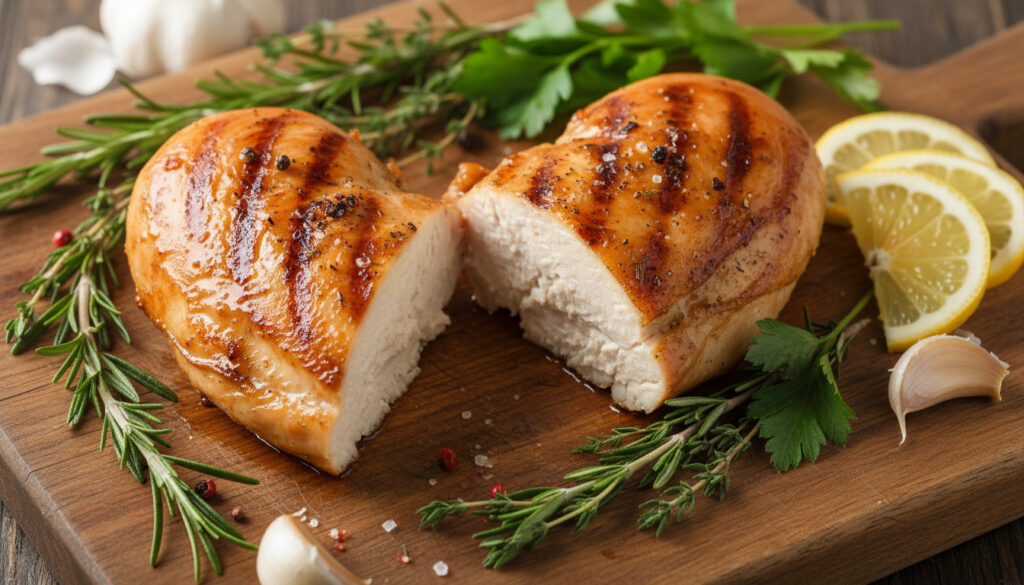
How to Cook Chicken Breast – Best Methods for Juicy Results
Chicken breast remains one of the most popular protein choices in home kitchens, yet it presents a persistent culinary challenge. Its lean composition offers nutritional advantages—delivering approximately 31 grams of protein per four-ounce serving—but this same lack of fat makes the muscle fibers prone to drying during heat exposure.
Mastering this cut requires understanding heat transfer rates and protein behavior. The margin between perfectly cooked and overcooked narrows to just a few minutes, demanding precise temperature control and technique. Multiple cooking methods exist, each offering distinct textural results depending on execution.
This guide examines evidence-based approaches to preparing chicken breast, drawing from tested culinary methods and USDA safety standards to eliminate guesswork.
What Is the Best Way to Cook Chicken Breast?
| Method | Heat Source | Approximate Time | Texture Result |
|---|---|---|---|
| Oven Baking | Dry indirect heat | 17-30 minutes | Juicy, even cooking |
| Pan Searing | Direct stovetop | 12-15 minutes | Crispy exterior |
| Grilling | Open flame | 10-14 minutes | Smoky char |
| Air Frying | Circulated hot air | 10-15 minutes | Crispy, low oil |
- Pound to uniformity: Reducing thickness variations to ½-¾ inch ensures simultaneous doneness throughout.
- High heat seals: Temperatures above 400°F cook the exterior quickly, trapping internal moisture.
- Thermometer reliance: Digital probes eliminate timing ambiguity, targeting 165°F internal temperature.
- Resting period: Five to ten minutes under foil allows juice redistribution.
- Pat dry first: Removing surface moisture promotes browning through Maillard reactions.
- Optional brining: Soaking in saltwater (¼ cup salt per quart) for 15-30 minutes enhances moisture retention.
| Method | Temperature | Cook Time | Internal Target | Rest Time |
|---|---|---|---|---|
| Oven (High Heat) | 425°F | 17-20 min | 165°F | 5 min |
| Oven (Standard) | 400°F | 25-30 min | 165°F | 5-10 min |
| Pan Sear | Medium-high | 6-7 min per side | 165°F | 5 min |
| Grill | 400°F | 6-8 min per side | 165°F | 5 min |
| Air Fryer | 375-400°F | 10-15 min | 165°F | 5 min |
| Frozen (Oven) | 425°F | 30-45 min | 165°F | 5 min |
Pounding chicken to an even thickness prevents thin edges from overcooking while centers remain raw. High-heat cooking methods seal in juices more effectively than low-temperature approaches.
How to Cook Chicken Breast in the Oven
Oven roasting provides the most consistent results for uniform thicknesses. Preheating to high temperatures—between 400°F and 450°F—creates the Maillard reaction necessary for flavor development while minimizing moisture loss.
High-Temperature Fast Roast
At 425°F, standard chicken breasts require 17 to 20 minutes. The high-heat method produces a caramelized exterior that signals proper doneness. Line the baking sheet with foil and apply cooking spray to prevent sticking.
Standard Temperature Approach
Operating at 400°F extends cooking to 25-30 minutes, suitable for larger pieces. Ten-ounce breasts require 26-32 minutes at this temperature. Broiling during the final two minutes adds crispness without additional cooking time.
Insert the thermometer probe into the thickest portion of the breast, avoiding bone contact. Remove the chicken from the oven when the display reads 160°F; carryover heat will elevate the internal temperature to the required 165°F during resting.
For detailed step-by-step instructions, see our Oven Baked Chicken Breast guide.
How to Pan Fry or Cook Chicken Breast on the Stove
Stovetop preparation delivers faster results with enhanced surface browning. The direct contact with hot metal creates a crust that oven methods cannot replicate.
Preparation and Searing
Pound the breast to even thickness before heating a heavy skillet over medium-high heat until the surface reaches approximately 375°F to 400°F. Add oil or butter to coat the pan bottom. Place the chicken without overcrowding, cooking three to four minutes per side until the internal temperature reaches 165°F.
Resting and Serving
Transfer the seared chicken to a plate and tent with foil. The five-minute rest period stabilizes the juices. Slice against the grain to shorten muscle fibers and improve tenderness.
How to Cook Chicken Breast Without Drying It Out
Moisture retention depends on controlling muscle fiber contraction. When chicken heats beyond 150°F, proteins tighten and expel water. Strategic preparation minimizes this effect.
Mechanical Tenderization
Pounding to an even ½-¾ inch thickness eliminates thin edges that overcook while centers remain raw. This uniformity allows the entire piece to reach target temperature simultaneously.
Removing chicken from heat at 160°F rather than 165°F accounts for residual heat transfer. The internal temperature continues rising 5-10 degrees during the resting phase, preventing overshoot that desiccates the meat.
Brining Science
Dissolving ¼ cup salt per quart of water creates an osmotic gradient that forces moisture into muscle cells. Soaking for 15-30 minutes before cooking provides insurance against overcooking, though proper technique makes this step optional.
Cooking at 350°F extends the time chicken spends in the danger zone of 140°F-160°F, accelerating moisture loss without safety benefits. Always use 400°F or higher for roasting.
Use a meat thermometer to verify 165°F in the thickest part. For an alternative approach that achieves similar juiciness, refer to this Juicy Oven Baked Chicken Breast technique.
How Long Does It Take to Cook Chicken Breast?
- Preparation: Pound and pat dry (5 minutes)
- Seasoning: Apply oil and spices (2 minutes)
- Oven Cooking: 17-30 minutes depending on temperature and thickness (source)
- Stovetop Cooking: 6-8 minutes per side (12-16 minutes total)
- Grilling: 6-8 minutes per side over direct heat
- Resting: 5-10 minutes under foil mandatory
Total active time ranges from 25 minutes for pan-seared to 45 minutes for oven-roasted preparations.
What Temperature Should Chicken Breast Be Cooked To?
| Established Standards | Uncertain Variables |
|---|---|
| USDA mandates 165°F internal temperature to eliminate Salmonella and Campylobacter. Digital thermometers provide accuracy within one degree. | Exact cooking times vary significantly based on starting temperature (refrigerated vs. room temp), individual oven calibration, and bone-in versus boneless cuts. |
| Carryover heat consistently raises temperature 5-10°F after removal from heat source. | Convection versus conventional oven settings alter heat transfer rates unpredictably without testing. |
Why Does Chicken Breast Dry Out So Easily?
Chicken breast contains minimal intramuscular fat compared to dark meat cuts. The protein structure consists primarily of muscle fibers with little connective tissue or marbling to lubricate the meat during heating.
When internal temperatures exceed 150°F, myosin proteins begin denaturing and contracting. This mechanical squeezing action forces intracellular moisture into the extracellular space, where it evaporates upon cutting. The lack of fat prevents reabsorption of these juices.
Modern commercial breeding has further reduced fat content in standard broiler chickens, making proper technique more critical than decades past.
What Do Food Safety Experts Recommend?
“Cook all poultry to a safe minimum internal temperature of 165°F as measured with a food thermometer. Color is not a reliable indicator of doneness.”
— USDA Food Safety and Inspection Service
“Brining transforms dry chicken into something juicy by altering the protein structure to hold more water. It’s the single most effective technique for lean poultry.”
— J. Kenji López-Alt, Serious Eats
Leftovers require refrigeration within two hours and remain safe for up to four days in airtight containers.
Can You Cook Chicken Breast from Frozen?
Frozen chicken breast requires modified protocols. Increase cooking time by fifty percent when baking—approximately 30-45 minutes at 425°F. Seasoning adheres poorly to frozen surfaces; apply spices after the exterior has partially thawed during the initial cooking phase. For optimal safety and texture, thawing overnight in the refrigerator remains the preferred method, though direct-from-freezer cooking remains safe when the internal temperature reaches 165°F.
Frequently Asked Questions
How long should I bake chicken breast at 375?
At 375°F, expect 30-35 minutes for average-sized breasts. However, 400-425°F produces juicier results in less time.
What is the best seasoning for chicken breast?
Olive oil, salt, pepper, garlic powder, onion powder, and paprika form the base. Adding ½ teaspoon brown sugar per breast enhances caramelization.
Should I cover chicken breast when baking?
Uncovered baking at high heat creates better texture. Cover only if cooking from frozen initially to trap steam, then uncover to finish.
How do I know when chicken breast is done without a thermometer?
Juices should run clear when pierced, and the meat should feel firm with slight resistance. However, thermometers remain the only reliable method.
Can I reuse marinade from raw chicken?
Never reuse marinade that contacted raw chicken unless boiled for at least five minutes to kill bacteria. Discard or boil before using as sauce.
Why is my chicken breast tough?
Overcooking past 165°F or failing to rest the meat causes toughness. Slicing with the grain rather than against it also increases chewiness.
More related posts
 LA Clippers vs Sacramento Kings Match Player Stats – Box Scores and Key Insights
 Part Time Jobs in Hamilton: No Experience, Student & Weekend
 Claudia Jessie: Relationship, Eye Condition, and Bridgerton Role
 Chop Steakhouse & Bar: Menu, Locations, Ownership Guide
 Marc Anthony: Biography, Relationships, Career Highlights
 Convert Pounds to Canadian Dollars: GBP/CAD Guide & Rates
 Thought of the Day: 101+ Best Quotes for School Assembly
 250 CAD to INR: Live Rates & Converter Guide
