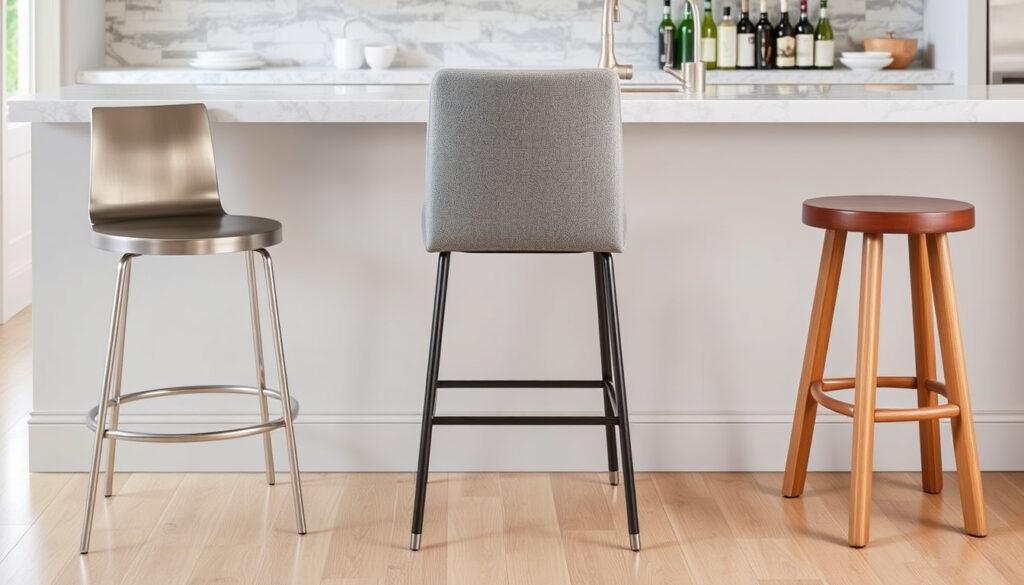
Bar Bar Stools Buying Guide: Style, Comfort & Size
You’ve probably stood in your kitchen, coffee in hand, wondering why the stools at the island never feel quite right. The problem is the lack of a clear buying guide that covers comfort, size, and material trade-offs in one place.
Average bar stool height (standard): 30 inches · Counter stool height (commonly confused): 24–26 inches · Seat depth range for comfort: 15–18 inches · Minimum distance between stools for small spaces: 10 inches · Most popular material in 2025: Mixed metal and wood
Quick snapshot
- Standard bar stool height is 30 inches for 42-inch counters (Tucker Furniture bar stool sizing guide)
- Most comfortable stools have upholstered seats and backrests (Studio McGee home design studio)
- Mixed material stools are a current trend (LuxeDecor buying guide)
- Whether wood or metal is more durable over 10+ years depends on specific build quality
- Exact market share of swivel vs fixed stools is not publicly available
- 2020–2022: Rise of home bar seating due to pandemic
- 2023–2025: Shift toward sustainable and mixed-material designs
- Expect more ergonomic features and customizable heights in future models
The height guidelines give you the starting point, but the real decisions come down to materials and comfort preferences.
| Feature | Value |
|---|---|
| Standard bar stool height | 30 inches (for 42-inch counters) |
| Counter stool height | 24–26 inches (for 36-inch counters) |
| Seat depth range for comfort | 15–18 inches |
| Minimum stool spacing | 10 inches apart |
| Most common material weight | Metal: 10–15 lbs, Wood: 15–25 lbs |
What bar stools are in style now?
Current trends lean toward mixed materials, with a wood seat on a metal frame being a popular combo. LuxeDecor buying guide notes that neutral tones and earthy colours dominate, while minimalist designs with clean lines are widely recommended. For a modern kitchen, consider a sleek metal finish; for a traditional space, natural wood with visible grain works well.
Trending materials: wood, metal, upholstered
- Wood brings warmth and weight. Seats and Stools bar stool retailer says wooden stools are heavier, adding stability.
- Metal is lighter and modern, but can dent. Aosom furniture retailer recommends metal for easy cleaning.
- Upholstered seats with foam padding are preferred for comfort, especially in dining areas.
Popular finishes and colors for 2025
Matte black, brass, and brushed nickel are top metal finishes. Wood tones like walnut and oak remain strong. HOLLY HUNT luxury furniture brand observations show that warm neutrals are replacing stark whites.
Styling for modern vs traditional kitchens
- Modern: backless metal stools with a matte black finish.
- Traditional: high-back wooden stools with turned legs.
- Transitional: mixed-material stools (wood seat, metal frame) tie both looks together.
The hottest look — mixed materials — also solves two problems: it gives you the warmth of wood where you sit and the easy-clean durability of metal on the frame. But if you go for a two-tone combo, make sure the colour contrast is intentional, not accidental.
The implication: style choices matter less than getting the height and comfort right first, then matching the finish to your existing kitchen palette.
What are the best bar stools to buy?
Best picks combine the right height with durable materials and comfort features. Studio McGee home design studio advises prioritizing stools with arms or upholstery when comfort is the main goal.
Top-rated models based on comfort and durability
- Stools with padded seats and footrests score highest in user reviews.
- Metal frames with wooden seats offer a balance of durability and style.
- Adjustable-height models fit multiple counter types.
Budget-friendly vs premium picks
- Under $100: Basic metal stools with padded seats are widely available.
- $150–$300: Mixed-material stools with better cushioning and finish.
- Over $300: Solid wood or designer models with custom upholstery and swivel features.
Key features to compare: height, material, swivel
- Measure counter height first, then subtract 10–12 inches for seat height.
- Material affects weight, care, and longevity.
- Swivel models add convenience but require wider bases for stability.
The best bar stool on paper might not fit your space. Always measure your counter and allow 10 inches between stools before buying.
What this means: prioritize fit and comfort over aesthetics, then choose the best model within your budget.
What type of bar stool is the most comfortable?
Comfort starts with the seat. Studio McGee home design studio advises prioritizing stools with arms or upholstery when comfort is the main goal. A padded seat with foam cushioning reduces pressure on the thighs, and a backrest supports the lower back during long sitting.
Importance of seat cushion and lumbar support
- Upholstered seats with high-density foam offer the best pressure relief.
- Lumbar support is often built into curved backrests; check for a slight forward curve at the lower back.
- Seat depth of 15–18 inches lets most adults sit without the edge of the seat pressing behind the knees.
Backless vs backed stools for long sitting
Backless stools save space and look minimalist, but they force your core muscles to work overtime. Restaurant Furniture Net commercial seating guide notes that bar stools with backrests are far more comfortable for meals lasting more than 30 minutes.
Ergonomic design elements
- A footrest at the right height (about 10–12 inches below the seat) keeps legs from dangling.
- Swivel function can help with entering and exiting without scooting the stool.
- Adjustable-height stools are versatile for different users.
If you’re buying stools for a kitchen island where the family gathers daily, skipping the backrest is a comfort mistake you’ll feel every evening. A backed stool with a footrest is the better choice for routines beyond a quick breakfast.
The pattern: comfort is non-negotiable for daily use, so prioritize cushioning, back support, and proper leg clearance.
What kind of bar stool for a small space?
Small kitchens and compact islands demand smart space-saving solutions. Backless stools that slide under the counter can save up to 12 inches of floor space per stool.
Space-saving designs: backless, stackable, swivel
- Backless stools tuck completely under the counter when not in use.
- Stackable stools store in a closet or corner.
- Swivel stools allow easy entry and exit in tight quarters.
Measuring your counter and room dimensions
- Measure the counter overhang: at least 10 inches is needed for knee room.
- Allow 36–42 inches of walking space behind the stools.
- Stools should not block cabinets or drawers when pushed in.
Stools that fit under the counter when not in use
Look for stools with a seat height that allows the top of the stool to sit flush under the counter edge. Tucker Furniture bar stool sizing guide recommends at least 6 inches of clearance between the seat top and the counter underside when the stool is pushed in.
In very small spaces, consider stools that double as step stools or have a narrow profile (under 16 inches wide). Every inch counts.
The implication: small spaces require strategic choices — backless or narrow stools keep the room feeling open while still providing seating.
What should bar stools match?
Matching stools to your kitchen or bar finish creates a cohesive look, but intentional contrast works too. The key is consistency within the room’s design language.
Matching stool height to counter height
- 42-inch bar: 30-inch stools with 10–12 inches of leg clearance.
- 36-inch counter: 24–26 inch stools with 10–12 inches of clearance.
- Always measure before buying — misjudged height ruins the look and comfort.
Coordinating with kitchen island or bar finish
- Match wood tones to existing cabinets or flooring.
- Metal stools can complement stainless steel appliances.
- Upholstered stools should coordinate with countertop or backsplash colors.
Mix-and-match strategies for style
Using two different stool colors or styles can work if they share a common element, like height or material. LuxeDecor buying guide suggests keeping the seat height identical even if styles vary.
Matching is about proportion, not perfection. A row of identical stools is safe; a curated mix is stylish — but only if the heights match.
What this means: measure first, match thoughtfully, and don’t be afraid to mix finishes if the proportions work.
Are wooden or metal bar stools better?
Five key differences, one pattern: wood wins on warmth and stability, metal wins on weight and modernity. The right choice depends on your décor and how much you’re willing to maintain.
| Feature | Wood | Metal |
|---|---|---|
| Durability | Can scratch and dent, but sturdy; can be sanded and refinished | May dent or chip, but resistant to warping and moisture |
| Weight | 15–25 lbs; heavier, less likely to tip | 10–15 lbs; lighter, easy to move |
| Comfort (unpadded) | Hard surface, but can be softened with cushions | Hard and cold, cushions recommended |
| Style compatibility | Warm, traditional, rustic | Modern, industrial, minimalist |
| Maintenance | Needs occasional polishing, avoid water rings | Wipe clean, check for rust on exposed joints |
Seats and Stools bar stool retailer confirms that comfort can be improved on either material by choosing upholstered or padded seats. So the real choice is aesthetic and structural.
Upsides
- Wood: timeless look, can be refinished, very stable.
- Metal: modern aesthetic, lightweight, easy to clean.
- Both materials offer customisable options with cushions.
Downsides
- Wood: heavier to move, can scratch, needs maintenance.
- Metal: can dent, cold to the touch, may wobble if base is narrow.
- Unpadded versions of both are uncomfortable for long sitting.
Wood stools are more stable because they’re heavier, but they’re also harder to move around the island. If you often rearrange your seating, a lightweight metal stool with a wide base gives you similar stability with less effort.
The pattern: wood suits traditional, stable setups; metal fits modern, flexible spaces. Both can be comfortable with the right cushion.
What bar stools don’t tip over?
Stability is a top safety concern, especially in homes with children or pets. Tucker Furniture bar stool sizing guide explains that a wider base — four legs spread out or a pedestal — reduces tipping risk. Lower centre of gravity also helps.
Features that prevent tipping
- Four legs with a wide stance (at least 18 inches apart) offer better balance.
- Pedestal bases distribute weight evenly but can be less stable if the stool is tall.
- Anti-slip floor protectors grip the surface and prevent sliding.
Swivel stools and stability
Swivel stools can tip if the base is too narrow or the user leans too far. Look for a swivel stool with a broad base and a weight rating that matches the user. Restaurant Furniture Net commercial seating guide recommends a minimum base diameter of 18 inches for swivel models.
Recommended designs for homes with children or pets
- Choose stools with a low seat height (25–26 inches) so children can climb safely.
- Metal stools with rubber feet grip the floor and reduce tipping.
- Avoid stools with sharp edges or exposed metal corners.
A stool that looks stable may still tip if the child climbs onto it from the side. The simplest fix: choose a stool with a weight rating of at least 300 lbs — that over-engineers the base and makes casual tipping much harder.
The implication: safety features like wide bases and anti-slip pads are not optional for busy households.
“Standard bar height is 42 inches and stools should be 28 to 30 inches tall.”
— Tucker Furniture bar stool sizing guide
“Comfort can be improved on either material by choosing upholstered or padded seats.”
“A common sizing rule is to leave about 10 to 12 inches between the seat top and the underside of the counter for legroom.”
For anyone shopping for bar stools in Ireland, the choice is clear: measure your counter height first, then prioritize comfort, or you’ll end up with stools that look good but leave you uncomfortable. The solid advice comes from knowing that a 30-inch stool under a 42-inch bar, with a 10-inch clearance, gives you the most repeatable fit. For a deeper framework on making good decisions, see our guide to Life Insurance Ireland: Types, Costs, and Best Age to Buy — it’s a different purchase, but the same principle of weighing trade-offs applies. And for a broader perspective on living well, Happy Life Happy: Unpacking the Phrase & 4 Key Frameworks offers useful reflection.
wholesalebarstoolclub.com, m.joybuy.de, chair.furniture, barstoolcomforts.com
If you’re based in the UK, the Bar Bar Stools UK guide provides tailored advice on finding the perfect stool for your space.
Frequently asked questions
How do I measure the right bar stool height?
Measure the height of your counter or bar surface. Subtract 10 to 12 inches to find the ideal seat height. For a standard 42-inch bar, aim for a stool height of 30 inches. LuxeDecor buying guide recommends checking this with a ruler before buying.
Should I buy bar stools with or without arms?
Arms add comfort but also increase the width of the stool. Measure your space: if you have less than 26 inches per stool, go armless to avoid crowding.
Can you use bar stools at a counter?
Yes, but only if the stool height matches the counter. A 36-inch counter needs a 24–26 inch stool. Using a 30-inch bar stool at a 36-inch counter leaves too much legroom.
What is the weight limit for standard bar stools?
Most standard bar stools support 250–300 lbs. Check the manufacturer’s specifications. Metal stools with a wide base often have higher weight limits.
How to clean and maintain wooden bar stools?
Dust regularly and wipe spills immediately. Use a wood cleaner monthly. Avoid placing near heat sources that can dry out the wood.
Are swivel bar stools less stable?
They can be if the base is too narrow. Look for a swivel stool with a base diameter of at least 18 inches for stability.
What is the best way to arrange bar stools around an island?
Leave 10 inches between stools and at least 26–30 inches center-to-center. If the island has a curved edge, place stools on the straight side for easier access.
More related posts
 Alex Hall: Bio, Relationships, and FAQs About Selling the OC Star
 Michelle Randolph: Age, Career, and Relationship Rumors
 Vladimir Guerrero Jr.: Biography, Stats, Contract & Family
 Environment Canada Yellow Squall Alert: Meaning & Safety
 140 cm to Inches – Exact Conversion and Real-World Context
 Sherwin-Williams Near Me: Stores, Hours & Stockists Guide
 Monica Bellucci: Biography, Children, Husband, and Age Gap
 Charles Bronson: Actor vs Prisoner Key Differences
