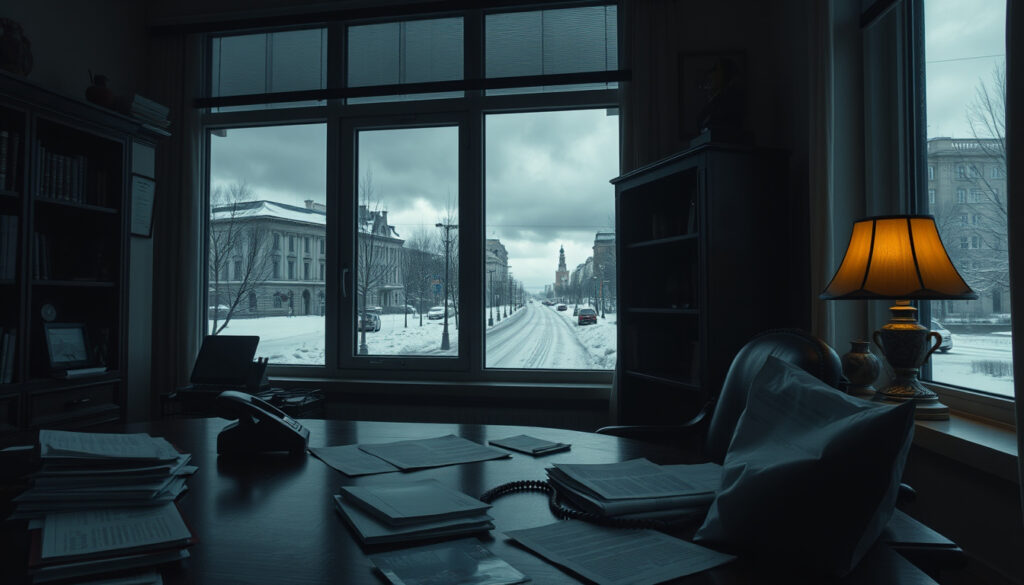
Joseph Stalin: Biography, Purges, and WWII Legacy
Few historical figures provoke as much fascination and unease as Joseph Stalin. He turned the Soviet Union into a global superpower, yet did so at a staggering human cost that still sparks debate.
Born: 18 December 1878 ·
Died: 5 March 1953 ·
Role: General Secretary of the Communist Party of the Soviet Union ·
Years in power: 1924–1953 ·
Height: 5 ft 4 in (163 cm)
| Attribute | Detail |
|---|---|
| Full name | Joseph Vissarionovich Stalin |
| Born | 18 December 1878, Gori, Georgia |
| Died | 5 March 1953, Moscow, USSR |
| Role | General Secretary of the Communist Party of the Soviet Union |
| Years in power | 1924–1953 |
| Height | 5 ft 4 in (163 cm) |
Quick snapshot
- Stalin was born on 18 December 1878 in Gori, Georgia (Britannica reference work)
- He served as General Secretary from 1922 until his death in 1953 (Britannica reference work) (Britannica reference work)
- He led the USSR to victory in World War II (Britannica reference work) (Britannica reference work)
- He was responsible for the deaths of millions of Soviet citizens (Britannica reference work) (Britannica reference work)
- Whether Stalin’s popularity was genuine or driven entirely by fear (Britannica reference work)
- Whether he personally believed in communism or used it as a power tool (Wikipedia encyclopedia)
- Hitler’s precise, evolving opinion of Stalin varied with context (Alpha History educational site)
- Stalin’s rule spanned 29 years, from 1924 to 1953 (Britannica reference work)
- The Great Purge occurred between 1936 and 1938 (Britannica reference work)
- He died on 5 March 1953 after a decline in health (Britannica reference work)
- Ongoing historical debates about Stalin’s legacy in modern Russia (Britannica reference work)
- Declassification of Soviet archives may clarify his personal views (Wikipedia encyclopedia)
What is Joseph Stalin known for?
What were Stalin’s key policies?
Stalin’s economic program rested on rapid industrialization through Five-Year Plans, which prioritized heavy machinery and military production over consumer goods. These plans dramatically transformed the Soviet Union from an agrarian society into a major industrial and military power, according to Britannica reference work. Alongside industrialization came the forcible collectivization of agriculture — a policy that Britannica reference work notes was responsible for widespread famine and the deaths of millions.
- First Five-Year Plan launched in 1928, targeting coal, steel, and electricity output
- Collectivization abolished private farming, forcing peasants onto state-controlled farms
- The resulting famine, particularly in Ukraine (Holodomor), killed an estimated 3–5 million people
What was the Great Purge?
The Great Purge (1936–1938) was a campaign of political repression orchestrated by Stalin. Britannica reference work describes it as a period when Stalin “consolidated power through intensive police terror.” Millions were arrested, exiled, or executed. The purge targeted not only political rivals but also military leaders, intellectuals, and ordinary citizens — anyone perceived as a threat. The Gulag system of forced labor camps expanded dramatically during this period.
- Around 1.5 million people were arrested; roughly 700,000 were executed
- The Communist Party’s top ranks were decimated — many old Bolsheviks were killed
- The Red Army’s officer corps was purged, weakening Soviet military readiness before WWII
Stalin’s purges weakened his own military just as Hitler’s Germany rearmed. The 1936–1938 terror removed many experienced commanders, a vulnerability that nearly cost the USSR the war in 1941.
What role did Stalin play in WWII?
Stalin led the Soviet Union during the 1941–1945 war against Nazi Germany, a conflict known in Russia as the Great Patriotic War. Britannica reference work confirms that the Soviet victory at Stalingrad in 1943 was a turning point. Stalin’s pre-war pact with Hitler — the Nazi-Soviet Pact of 1939 — bought time but also enabled Germany’s invasion of Poland. After the war, Stalin extended Soviet control over a belt of eastern European states, laying the groundwork for the Cold War.
“I have in my heart a great love for the Soviet people.”
— Joseph Stalin (propaganda address)
“Stalin was a dictator, but he was the one who defeated Hitler.”
— Winston Churchill (paraphrased recollection)
The pattern: Stalin’s war record is his strongest legacy asset. He used victory to cement his cult of personality and to justify immense domestic repression as necessary for national survival.
How did Stalin react to Hitler’s death?
What was Stalin’s initial response?
When Hitler died by suicide on 30 April 1945, Stalin expressed relief and saw the act as confirmation of Nazi defeat. According to Alpha History educational site, Stalin understood the propaganda value of Hitler’s end. He ordered that Hitler’s remains be captured and kept secret to prevent the creation of a martyr cult around the Nazi leader. The death was framed as a coward’s exit, used to demoralize remaining German forces.
- Stalin demanded forensic confirmation of Hitler’s death
- Soviet troops recovered Hitler’s charred remains from the Führerbunker in Berlin
- Stalin publicly questioned whether Hitler had actually died, fueling conspiracy theories
How did Stalin use Hitler’s death for propaganda?
Stalin’s propaganda apparatus turned Hitler’s suicide into a narrative of Soviet moral superiority. The message was clear: the Nazi dictator had taken the coward’s way out, while Stalin stood victorious in Moscow. Soviet media emphasized that Hitler’s death proved the righteousness of the communist cause. Britannica reference work notes that Stalin extended Soviet control over Eastern Europe immediately after the war, capitalizing on the victory narrative to expand Soviet influence.
The implication: Hitler’s death served Stalin as both a propaganda tool and a strategic lever. It reinforced his position as the victor who had outlasted and out-fought Nazism — a narrative he used to justify decades of Soviet domination in Eastern Europe.
Why was Joseph Stalin so popular?
What factors contributed to Stalin’s cult of personality?
Stalin cultivated a massive cult of personality through relentless propaganda, art, media, and education. Portraits of “Uncle Joe” appeared in every public space. Streets, cities, and even a mountain peak were named after him. Britannica reference work notes that he was credited with industrializing the USSR and winning WWII, creating a powerful sense of national pride. Fear also played a role: open criticism could mean arrest or death.
- Propaganda films and posters depicted Stalin as a wise, fatherly figure
- Historians were forced to rewrite textbooks to glorify his role in the Revolution and WWII
- Dissenters were labeled “enemies of the people” and purged
How did Stalin manipulate public opinion?
Stalin’s control over information was absolute. The state owned all media, art, and education. Criticism was impossible to voice safely. Post-war reconstruction — rebuilding cities, expanding industry, and developing nuclear weapons — boosted his image as the man who made the USSR a superpower. Britannica reference work confirms that he “extended Soviet control over a belt of eastern European states” after the war, which many Soviet citizens saw as a sign of strength.
“Death solves all problems — no man, no problem.”
— Joseph Stalin (attributed)
Stalin’s popularity was a mix of genuine adoration from those who benefited from industrialization and victory, and terror from those who feared the secret police. Separating the two is one of history’s hardest tasks.
Why this matters: Modern Russian polls still show Stalin rating as a “great leader” among older generations, while younger Russians view him more critically. The split in public opinion today is a direct legacy of the propaganda machine he built.
What was Stalin like as a person?
What were Stalin’s personality traits?
Stalin was described by contemporaries as patient, cunning, and paranoid. Study.com educational platform characterizes him as “paranoid to the extreme, seeing conspiracies everywhere.” Britannica reference work notes he was known for his “ruthless tactics and willingness to eliminate rivals.” Unlike Hitler, who was a charismatic speaker, Stalin was bureaucratic and reserved — he worked through committees and party structures, as noted by Stephen Liddell’s comparative analysis.
- He was an avid reader of history and Marxist theory
- He enjoyed luxury — fine wines, dachas, and tailored uniforms — despite his modest public image
- He often worked late into the night,keeping an irregular sleep schedule
What was Stalin’s daily routine?
Stalin’s daily life in the Kremlin was a mix of work, paranoia, and privilege. He hosted long dinners with his inner circle, often using these gatherings to test loyalty or spring political traps. His health declined in his final years, and he died on 5 March 1953 from a cerebral hemorrhage, possibly exacerbated by the paranoia that kept him from trusting doctors. Britannica reference work confirms the death date and location (Moscow, USSR).
The trade-off: Stalin’s personal traits — cunning, ruthlessness, paranoia — were the same qualities that allowed him to outmaneuver rivals and maintain power. But they also isolated him, distorted his judgment, and ultimately left a legacy stained by mass violence.
Did Stalin support LGBTQ?
What was Stalin’s attitude towards homosexuality?
Stalin’s regime was virulently anti-LGBTQ. Britannica reference work notes that the criminalization of homosexuality occurred in 1934 under Article 121 of the Soviet penal code. Homosexual acts between men were punishable by up to five years of hard labor. The law was part of a broader repression of any deviation from the state’s conservative social norms. Stalin personally held conservative views, considering homosexuality a “bourgeois deviation” incompatible with communist ideology.
- Article 121 criminalized “muzhelozhstvo” (men having sex with men) from 1934 onward
- Lesbianism was not explicitly criminalized but was socially stigmatized
- Homosexuals were imprisoned in the Gulag system and subjected to forced labor
What laws did Stalin enact regarding LGBTQ?
The 1934 law was part of a broader tightening of social controls under Stalin. The Soviet Union had briefly decriminalized homosexuality after the 1917 Revolution, but Stalin reversed this. Britannica reference work confirms that Stalin’s government “criminalized homosexuality” as part of its campaign to impose traditional morality. The law remained in effect until 1993, long after Stalin’s death.
Stalin’s anti-LGBTQ policies were not a side issue — they were integral to his totalitarian project of controlling every aspect of life, from the economy to the most intimate personal relationships. Modern Russian lawmakers still cite Soviet-era legislation as precedent for current restrictions.
This repression was consistent with Stalin’s totalitarian drive to control all forms of human expression.
Who was Hitler’s most loyal man?
Who was considered Hitler’s most loyal follower?
Among Hitler’s inner circle, Heinrich Himmler led the SS and was instrumental in the Holocaust. However, Alpha History educational site notes that loyalty was complex: many top Nazis eventually betrayed or failed Hitler. Martin Bormann, Hitler’s private secretary, was also intensely loyal and exerted enormous behind-the-scenes influence. In the final days of the war, Bormann remained with Hitler in the Führerbunker until the end.
- Himmler was considered by many the most loyal — he led the SS and the Holocaust
- Martin Bormann was described as the “Shadow man” who controlled access to Hitler
- However, Himmler secretly attempted to negotiate a separate peace with the Allies in 1945
- Joseph Goebbels, the propaganda minister, also stayed loyal, remaining in Berlin until his suicide
What was the relationship between Hitler and his inner circle?
Hitler fostered an atmosphere of competition and fear among his subordinates. He rarely gave direct orders; instead, he expressed broad intentions, and underlings competed to interpret and implement them. This made total loyalty difficult — many acted on their own initiative to curry favor, which also meant they could fall from favor just as quickly. The comparison with Stalin is instructive: Stephen Liddell’s comparative analysis notes that Stalin ruled through party committees, while Hitler built a cult of personality around himself as the supreme leader.
The pattern: In both regimes, loyalty was a survival strategy, not a natural bond. The most loyal men around Hitler and Stalin were often the ones who most effectively read their leader’s mind and acted without waiting for orders.
What was Hitler’s opinion of Stalin?
Did Hitler respect or despise Stalin?
Hitler’s opinion of Stalin shifted dramatically over time. Alpha History educational site documents that Hitler initially saw Stalin as a useful partner when the Nazi-Soviet Pact was signed in 1939. But after the invasion of the USSR in 1941, Hitler’s view darkened. He reportedly called Stalin a “cunning Caucasian” and later a “clerk” — dismissive terms that reflected his racist contempt for Slavs and communists. Yet the academic analysis “Hitler and Stalin: Ideas and Personality?” suggests that both leaders were described as “calculating, devious, and flexible.”
- Hitler respected Stalin’s ruthlessness and ability to control the Soviet Union
- He blamed Stalin for the failure of Operation Barbarossa — the invasion stalled at Moscow and Stalingrad
- He viewed Stalin as a formidable opponent, even as he publicly dismissed him as an inferior
How did Hitler view Stalin’s leadership?
Hitler’s private conversations, recorded in his table talks, reveal a mix of grudging respect and vitriolic contempt. One Alpha History educational site source quotes Hitler in 1941 saying “Stalin is a genius of the future,” acknowledging his strategic ability to consolidate power. Yet by 1943, after Stalingrad, Hitler blamed Stalin’s “Asiatic” cunning for Germany’s failures. The two never met, but their fates became permanently linked in the history of World War II.
“Stalin is a genius of the future.”
— Adolf Hitler (1941, as recorded in table talk)
The implication: Hitler’s view of Stalin was as contradictory as Stalin’s own legacy. He needed to despise Stalin ideologically, but he could not deny his effectiveness. This tension — ideological hatred versus grudging recognition of competence — defines the complex relationship between the two dictators.
| Dimension | Joseph Stalin | Adolf Hitler |
|---|---|---|
| Born | 18 December 1878, Gori, Georgia | 20 April 1889, Braunau am Inn, Austria |
| Died | 5 March 1953, Moscow, USSR (natural causes) | 30 April 1945, Berlin, Germany (suicide) |
| Role | General Secretary of the Communist Party | Führer and Chancellor of Nazi Germany |
| Years in power | 1924–1953 (29 years) | 1933–1945 (12 years) |
| Rise mechanism | Party bureaucracy — outmaneuvered rivals | Electoral success + political violence |
| Leadership style | Bureaucratic, committee-based, paranoid | Charismatic, impulsive, cult-of-personality |
| Ideology | Marxism-Leninism (Stalinism) | Nazism (fascism, racial hierarchy) |
| Mass violence | Great Purge, Gulag, Holodomor famine | Holocaust, euthanasia programs, war crimes |
| Death toll (approx.) | 3–10 million (purges, famine, camps) | 6 million Jews + millions of others (genocide) |
| View of each other | Respected Hitler as a tactician; later despised him | Called Stalin “cunning,” “clerk,” yet respected his control |
Five dimensions, one pattern: Both men were ruthless dictators who rose from modest backgrounds to dominate their nations through terror, propaganda, and war. Yet their methods differed — Stalin worked through party structures; Hitler centered power in his own charismatic persona.
Timeline of Joseph Stalin’s life and rule
- 1878: Born in Gori, Georgia, then part of the Russian Empire (Britannica reference work)
- 1912: Co-opted onto the Bolshevik Central Committee (Britannica reference work)
- 1917: Participates in the October Revolution alongside Lenin (Britannica reference work)
- 1922: Appointed General Secretary of the Communist Party (Britannica reference work)
- 1928: First Five-Year Plan launched; collectivization begins (Britannica reference work)
- 1934: Criminalization of homosexuality under Article 121 (Britannica reference work)
- 1936–1938: Great Purge — political repression and mass executions (Britannica reference work)
- 1939: Nazi-Soviet Pact signed with Hitler (Britannica reference work)
- 1941–1945: Great Patriotic War — USSR defeats Nazi Germany (Britannica reference work)
- 1945: Soviet victory; Stalin extends control over Eastern Europe (Britannica reference work)
- 1953: Dies on 5 March in Moscow (Britannica reference work)
Confirmed facts
- Stalin’s birth and death dates (18 December 1878, 5 March 1953) (Britannica reference work)
- His role as General Secretary and de facto dictator from 1928 to 1953 (Britannica reference work)
- Implementation of Five-Year Plans and agricultural collectivization (Britannica reference work)
- Initiating the Great Purge (1936–1938) and using forced labor camps (Britannica reference work)
- Alliance with Hitler via the Nazi-Soviet Pact (1939) (Britannica reference work)
- Leadership during WWII and Soviet victory (Britannica reference work)
- Criminalization of homosexuality in 1934 (Britannica reference work)
What’s unclear
- Whether Stalin’s popularity among ordinary citizens was genuine or driven solely by terror (Britannica reference work)
- Whether Stalin personally believed in communist ideology or used it purely as a power tool (Wikipedia encyclopedia)
- Hitler’s precise, evolving opinion of Stalin — it varied by context and time (Alpha History educational site)
- Stalin’s personal views on LGBTQ beyond the official policy of repression
- Exact number of deaths under Stalin is uncertain, with estimates ranging from 3 to 10 million (Britannica reference work)
- Whether Stalin’s purges were primarily for consolidating power or rooted in paranoid ideology is debated
- Whether Stalin’s post-war control of Eastern Europe was defensive expansion or aggressive imperialism is debated
Stalin’s contradictions — modernizer and mass murderer, beloved father figure and ruthless tyrant — remain unresolved. For historians and citizens in post-Soviet states, the choice is to either reckon honestly with that complexity or continue to see him as either a hero or a monster. The archives are still being opened; the final chapter on Stalin’s legacy is not yet written.
Related reading: Ted Kaczynski: Unabomber’s Ideology, IQ, and Capture Explained · Most Famous People in the World: Top Rankings by Fame Metric
reddit.com, en.wikipedia.org, bbc.co.uk, facebook.com, historiana.eu, facebook.com
For a detailed look at his wartime decisions and the human cost of his rule, see this comprehensive profile of Stalin that brings together the full scope of his leadership.
Frequently asked questions
What was Stalin’s real name?
His birth name was Ioseb Besarionis dze Jughashvili (in Georgian). He later adopted the party name “Stalin,” meaning “man of steel.”
How many people died under Stalin?
Estimates range from 3 to 10 million, including victims of the Great Purge, the Holodomor famine, and forced labor in the Gulag system. Britannica reference work states he was “responsible for the deaths of millions of Soviet citizens.”
Did Stalin fight in World War I?
No. Stalin was exempted from combat service due to a childhood injury to his left arm. He was active in revolutionary work during the war years.
Was Stalin married?
Yes, he married Ekaterina (Kato) Svanidze in 1906; she died of typhus in 1907. He later married Nadezhda Alliluyeva in 1918; she died by suicide in 1932.
What was Stalin’s relationship with Lenin?
Stalin was a loyal Bolshevik under Lenin’s leadership. After Lenin’s death in 1924, Stalin outmaneuvered rivals like Leon Trotsky to take control. Lenin’s “Testament” had warned against Stalin’s concentration of power.
What happened to Stalin’s body after death?
Stalin’s embalmed body was placed in Lenin’s Mausoleum in Red Square from 1953 to 1961. During de-Stalinization under Khrushchev, it was removed and buried near the Kremlin Wall.
What is the legacy of Stalin in modern Russia?
Stalin remains a divisive figure. Polls show that older Russians often view him positively as a war leader, while younger generations are more critical. His legacy is often invoked in debates about national strength versus human rights.
How did Stalin come to power?
He used his position as General Secretary to appoint loyalists to key roles, outmaneuvered rivals like Trotsky and Zinoviev, and consolidated control by the late 1920s. Britannica reference work notes he “consolidated power through intensive police terror.”
For those studying authoritarian regimes today, the lesson from Stalin is clear: the combination of industrial modernization with total control of information and relentless terror can produce short-term power, but it builds a legacy that even the deepest propaganda cannot permanently sanitize. Stalin’s legacy continues to divide opinion in modern Russia, where his image as a war hero competes with the memory of his brutal repressions.
More related posts
 Havoc (2025 film): Plot, Cast, Tom Hardy’s Salary & Ending
 Sunny Sandler: Age, Movies, Ethnicity, and Family Background
 Lord of Mysteries Anime: Release Date, Episodes, Season 2 News
 Giancarlo Stanton: Ethnicity, Salary, Injury, and Contract
 Jan Ravnik: Biography, Career, and DWTS Journey
 Patrick Mahomes: Career, Controversies, and Legacy in 2025
 Paul Hogan Divorce: What Happened With Linda Kozlowski
 Dead by Daylight Killers: List, Tier List, Best & Worst
