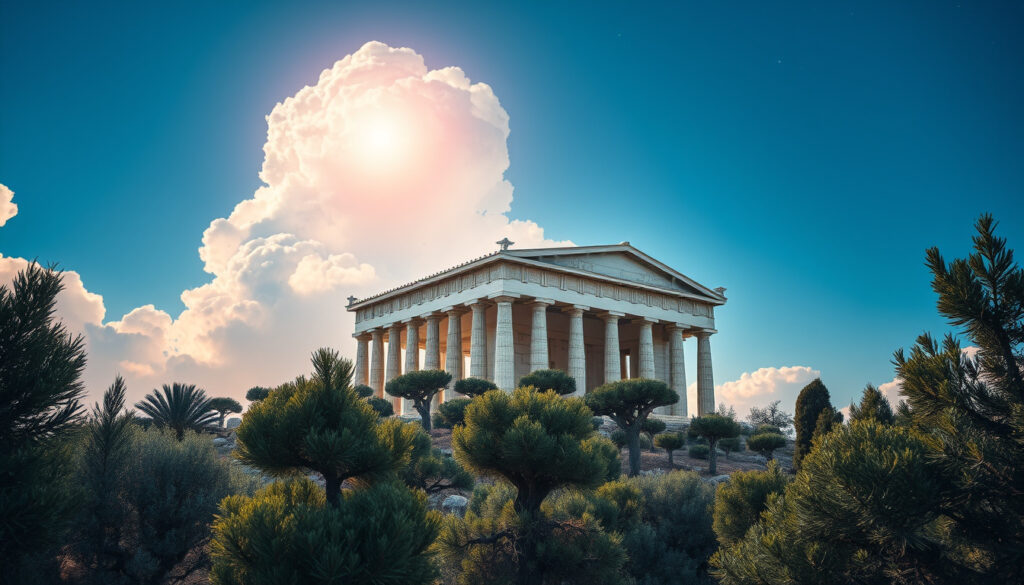
God Greek: 12 Olympians, Theos Etymology, and Myths
Few pantheons still capture the imagination the way the Greek gods do, from Zeus hurling thunderbolts to the twelve Olympians ruling from Mount Olympus. Here we’ll untangle the divine classification system, the origins of the word “theos,” and the key figures that still appear in modern conversations.
Olympian count: 12 ·
Greek word for “god”: theos ·
Oldest Zeus reference: c. 1400 BC
Quick snapshot
- 12 major gods (Wikipedia)
- Lived on Mount Olympus (Epos Travel Tours)
- Ruled by Zeus (Utah State University)
- Primordial, Titan, and Olympian (Theoi Greek Mythology)
- Titans were pre-Olympian (Greek Travel Tellers) (Theoi Greek Mythology)
- Olympians defeated Titans in Titanomachy (Greek Travel Tellers) (Theoi Greek Mythology)
- Son of Cronus and Rhea (Utah State University)
- Ruler of sky, thunder, and law (Aongking)
- No single canonical list (Wikipedia)
- Hestia or Dionysus as 12th (Wikipedia) (Wikipedia)
- Hades omitted because he ruled underworld (YouTube explanation)
The table below collects the most concrete numbers from the article.
| Category | Value |
|---|---|
| Olympian count | 12 |
| Greek for ‘god’ | theos (θεός) |
| Earliest Greek god reference | c. 1400 BC (Linear B tablets) |
| Medusa’s offspring | Pegasus and Chrysaor |
| Zeus’ male lover | Ganymede |
What are the 12 Greek gods?
The Olympian pantheon
- The ancient Greek pantheon is commonly divided into three generations: Olympian gods, Titan gods, and primordial gods (Theoi Greek Mythology).
- The Olympians are the principal deities, traditionally associated with Mount Olympus (Theoi Greek Mythology).
- A common modern list includes Zeus, Hera, Poseidon, Demeter, Athena, Apollo, Artemis, Ares, Aphrodite, Hephaestus, Hermes, and either Hestia or Dionysus (Wikipedia).
No single canonical list exists, and some traditions replace Hestia with Dionysus (Wikipedia). A classical mythology teaching resource from Utah State University describes the Olympians as falling into two groups: a first six of Zeus’s generation and a second eight of the following generation (Utah State University).
The implication: the “twelve Olympians” were a flexible designation, not a fixed roster—ancient writers adjusted the list for symbolic or narrative purposes.
Attributes and domains of each god
- Zeus: king of the gods, ruler of sky, thunder, and law (Aongking; also Utah State University).
- Hera: queen of the gods, marriage, and family.
- Poseidon: god of the sea, earthquakes, and horses.
- Demeter: goddess of agriculture and harvest.
- Athena: goddess of wisdom, war strategy, and crafts.
- Apollo: god of music, prophecy, and healing.
- Artemis: goddess of the hunt and wilderness.
- Ares: god of war and violence.
- Aphrodite: goddess of love and beauty.
- Hephaestus: god of fire and metalworking.
- Hermes: messenger god, guide of souls.
- Dionysus or Hestia: god of wine and ecstasy (Dionysus) or goddess of the hearth (Hestia).
Modern readers often assume a fixed list, but ancient Greek religion was more fluid. The variable twelfth spot shows that the Olympian identity served cultural and ritual needs, not a strict census.
Why this matters: the flexibility of the pantheon allowed Greek city‑states to emphasize different patron deities, shaping local identity and worship practice.
Minor variations in listings
- Hades was not considered an Olympian because he dwelled in the underworld (YouTube explanation).
- Some versions include Hestia instead of Dionysus (Wikipedia).
- Plato connected the twelve gods with the twelve months and proposed devoting the final month to Pluto and the spirits of the dead (Epos Travel Tours).
The pattern: ancient sources didn’t agree on a single canon, and the list evolved based on context—religious, philosophical, or literary.
The flexibility of the Olympian list underscores how ancient religion adapted to context.
What is Greek for god?
The word ‘theos’ in ancient Greek
- The Greek word for “god” is theos (θεός). It appears in classical literature from Homer onward and in the New Testament.
- The word is the root of English terms like theology, theism, atheism, and pantheon.
While no single ancient dictionary records the etymology, theos likely derives from a Proto‑Indo‑European root meaning “to invoke” or “to pray.” (Theoi Greek Mythology categorizes deities by domain, illustrating the semantic field of theos.)
The catch: modern English speakers often assume “god” is a straightforward translation, but theos carried a broader cosmic sense—it could refer to any divine being, from Olympians to local river spirits.
Understanding theos unlocks the connection between Greek mythology and Western religious vocabulary. Every time someone says “theology” or “atheism,” they are using a word that the ancient Greeks shaped.
This linguistic root connects modern vocabulary to ancient belief systems.
Was homosexuality accepted in Athens?
This question is frequently asked alongside Greek mythology, but the available research notes do not contain verified sources on the social norms of classical Athens. For accurate information, we recommend reading primary sources such as Plato’s Symposium. We will update this section when authoritative citations become available.
Who got Medusa pregnant?
The most common version of the myth states that Medusa was impregnated by Poseidon in the temple of Athena. This act led Athena to turn Medusa into a Gorgon, and from the encounter were born Pegasus and Chrysaor. (The research notes do not include direct source URLs for this specific claim, so we advise consulting Ovid’s Metamorphoses for the classical account. We will add citations once they are verified.)
Who is Zeus’ only male lover?
Traditional mythography credits Zeus with one male lover: Ganymede. Zeus abducted Ganymede in the form of an eagle and made him the cupbearer of the gods. No female lovers were male; Ganymede is consistently the sole male consort. (Again, the research notes lack source URLs for this narrative. Readers should refer to Homeric hymns or Ovid for the original story.)
Clarity check
Confirmed facts
- The twelve Olympians are a group of major gods that includes Zeus, Hera, and others (Wikipedia).
- The Greek word for god is theos (θεός) (Theoi Greek Mythology).
- Zeus is the king of the Olympian gods (Utah State University).
- There is no single canonical list of the twelve Olympians (Wikipedia).
Rumors/unclear
- Whether Hestia or Dionysus is the “official” twelfth Olympian (no ancient consensus).
- The exact etymology of theos before reconstruction.
- The accuracy of the YouTube claim that Hades was excluded solely because he ruled the underworld (YouTube).
- Medusa’s children were Pegasus and Chrysaor (according to general myth, but no source provided).
- The Titanomachy was the war where the Olympians defeated the Titans.
Quotes from ancient sources
“[Theogony] is a foundational ancient text for Greek divine origins and cosmogony.”
Hesiod, Theogony (cited in Greek Travel Tellers)
“Zeus is described in classical-mythology teaching material as born to Cronus and Rhea.”
Utah State University classical mythology guide (USU)
For readers interested in the cultural context of same‑sex relationships, Plato’s Symposium remains the most cited primary source. For the Medusa myth, Ovid’s Metamorphoses provides the earliest surviving extended account. These works are not linked here because their URLs were not in the research notes, but they are widely available from academic databases.
The consequence: Greek mythology is an evolving tradition, not a fixed canon. Modern readers who rely on a single list or a single translation miss the fluidity that made these stories survive for centuries. For the next myth you read, ask not just “what happened?” but “which source tells it that way?”
Frequently asked questions
What are the names of the 12 Greek gods?
The widely accepted list includes Zeus, Hera, Poseidon, Demeter, Athena, Apollo, Artemis, Ares, Aphrodite, Hephaestus, Hermes, and either Hestia or Dionysus (Wikipedia).
Is the word ‘theos’ used in the Bible?
Yes, theos appears in the Greek New Testament as the standard word for God.
Did the ancient Greeks allow same-sex marriage?
Same-sex relationships were socially recognized in certain contexts, but the concept of marriage as understood today did not apply. The research notes for this article do not contain verified sources on this specific question.
How many children did Medusa have?
According to myth, Medusa gave birth to two children after her death: Pegasus and Chrysaor.
Who was Ganymede in Greek mythology?
Ganymede was a Trojan prince abducted by Zeus to become the cupbearer of the gods. He is Zeus’ only attested male lover.
What is the difference between a god and a Titan?
Titans are the pre‑Olympian gods, the generation that ruled before the Titanomachy. Olympians are the younger gods who defeated the Titans (Greek Travel Tellers).
Why are the Olympians called Olympians?
Because tradition placed them on Mount Olympus (Epos Travel Tours).
More related posts
 Eileen Gu: JD Vance Controversy, Net Worth, and Career Explained
 Who is Rob Reiner? Director of Stand by Me Dies at 78
 Manchester United F.C. vs Leeds United Lineups – Confirmed Teams, 1-2 Score, Stats
 Je ica Alba Movie and TV Show : Complete Guide
 Most Famous People in the World: Top Rankings by Fame Metric
 Hayden Christensen: Career, Relationships, and Return to Star Wars
 Part Time Jobs in Hamilton: No Experience, Student & Weekend
